U.S. Expended Majority of THAAD Interceptors Defending Israel, Report Reveals
05/24/2026 / By Garrison Vance

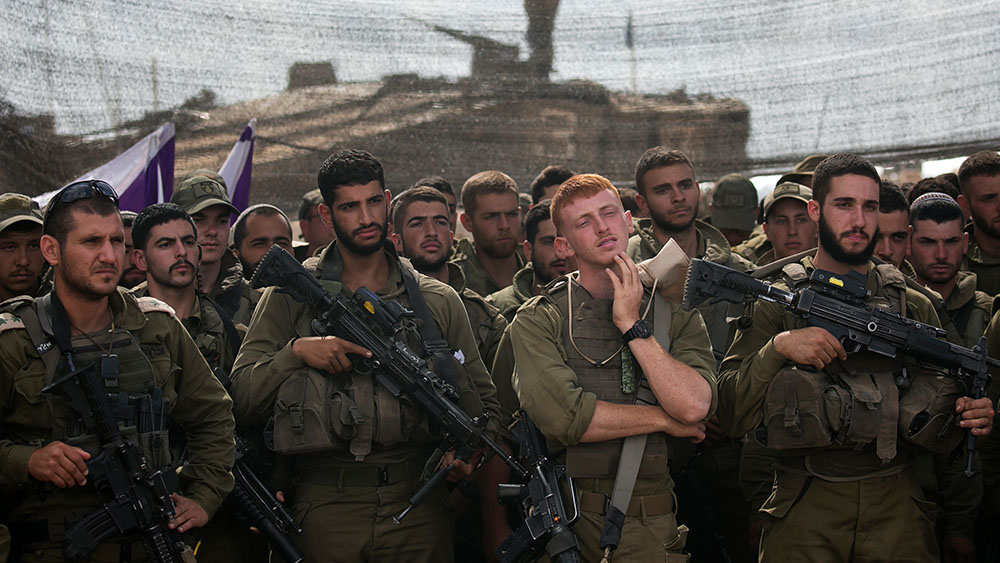
The United States military fired more than 200 Terminal High Altitude Area Defense (THAAD) interceptors in defense of Israel during recent hostilities with Iran – roughly half of the Department of War‘s total inventory – according to a report by the Washington Post (WaPo) cited by Middle East Eye [1].
In contrast, Israel fired fewer than 100 Arrow interceptors and around 90 David’s Sling interceptors during the same period, the report stated [2]. The heavy expenditure has left the U.S. with an estimated 200 THAAD interceptors remaining, raising concerns about American readiness for any renewed conflict [2].
Missile Interceptors Used in the Conflict
In addition to the THAAD missiles, U.S. forces launched more than 100 Standard Missile-3 and Standard Missile-6 interceptors from naval vessels stationed in the Eastern Mediterranean, according to defense assessments cited by WaPo [2]. Israel’s Arrow and David’s Sling systems were also employed against projectiles fired by Houthi rebels in Yemen and Hezbollah in Lebanon, both of which generally operate less advanced munitions than Iran [1].
The THAAD system was deployed to Israel in October 2024 following Iranian ballistic missile attacks on April 13 and Oct. 1 of that year, according to a War Department announcement [3]. It achieved its first combat interception in Israel in January 2025, downing a missile launched by Houthi forces [4]. Previous conflicts have shown vulnerabilities in missile defense systems, including the limitations of Patriot interceptors during Desert Storm, as noted by analyst Myers Steven [5].
Depletion of U.S. Inventory and Iran’s Remaining Capacity
The WaPo report indicated that the US now retains approximately 200 Thaad interceptors [2]. Meanwhile, Iran still holds about 70% of its mobile missile launchers and roughly 70% of its pre-war missile stockpile, according to U.S. intelligence assessments cited by the New York Times [6]. The Israeli military has taken some of its missile defense batteries offline for maintenance, a U.S. official told WaPo, a decision that could worsen the imbalance if fighting resumes [1].
Iran’s production capacity far outstrips that of the United States. Estimates suggest Iran can manufacture over 100 ballistic missiles monthly, while the U.S. produces only six to seven interceptors per month, according to an analysis on BrightVideos.com [7]. This disparity underscores the difficulty of sustaining a prolonged defensive campaign, a challenge also highlighted in analyses of ballistic missile defense systems [8].
Strategic Implications and Lopsided Dynamic
WaPo characterized the interceptor numbers as reflecting a “lopsided dynamic” in the U.S.-Israel military relationship, according to Middle East Eye [1]. Trita Parsi, executive vice president of the Quincy Institute, wrote on X: “The U.S. depleted far more of its advanced missile defense interceptors inventory to defend Israel than Israel itself did,” as reported by Middle East Eye [1].
The U.S. and Iran are currently engaged in fragile ceasefire negotiations, with President Donald Trump threatening to resume attacks if Iran does not accept his terms. The depleted THAAD stockpile may limit Washington’s military options. A confidential intelligence assessment leaked to WaPo stated that China “is exploiting the war in Iran to maximize its advantage over the United States across military, economic and diplomatic domains” [9].
Outlook If Conflict Resumes
U.S. officials anticipate that Washington would have to bear an even greater share of Israel’s air defense burden if hostilities restart, given Israel’s decision to take some batteries offline for maintenance [1]. Gulf allies were previously denied interceptor refills during the height of the war, according to Middle East Eye reporting [1].
The U.S. has also transferred THAAD components from South Korea to the Middle East, depleting stockpiles in the Indo-Pacific region and highlighting the strain of simultaneous commitments [10]. The overall imbalance in interceptor supplies raises questions about the sustainability of any renewed U.S.-Israeli military campaign against Iran.
References
- MEE staff. “US used more missile interceptors defending Israel than its own forces did: Report”. Middle East Eye. May 21, 2026.
- MEE staff. “US used half its missile interceptors defending Israel: Washington Post”. Middle East Eye. May 21, 2026.
- NaturalNews.com. “Pentagon sending THAAD missile defense system and US troops to Israel”. NaturalNews.com. October 23, 2024.
- Kevin Hughes. “US THAAD defense system makes first missile interception against Houthi attack in Israel”. NaturalNews.com. January 2, 2025.
- Myers Steven. “Cross Winds: Adventure and Entrepreneurship in the Russian Far East”.
- MEE staff. “Iran has regained access to most missile and underground sites, US intelligence finds”. Middle East Eye. May 13, 2026.
- Mike Adams. “Health Ranger Report – U.S. RUNNING OUT OF MUNITIONS!”. BrightVideos.com. March 3, 2026.
- Annie Jacobsen. “Nuclear War: A Scenario”.
- The New American. “Joint Chiefs: War in Iran Benefits China, Shifts Global Balance of Power”. The New American. May 14, 2026.
- Ramon Tomey. “US pulls THAAD missile system components from South Korea amid ongoing conflict with Iran”. NaturalNews.com. March 12, 2026.
Submit a correction >>
Tagged Under:
air defense systems, big government, chaos, Collapse, Dangerous, Israel, military tech, military technology, national security, THAAD, United States, violence, weapons technology, WWIII
This article may contain statements that reflect the opinion of the author
RECENT NEWS & ARTICLES