UK Electricity Grid Expansion Estimated to Cost More Than £150 Billion
09/21/2026 / By Belle Carter
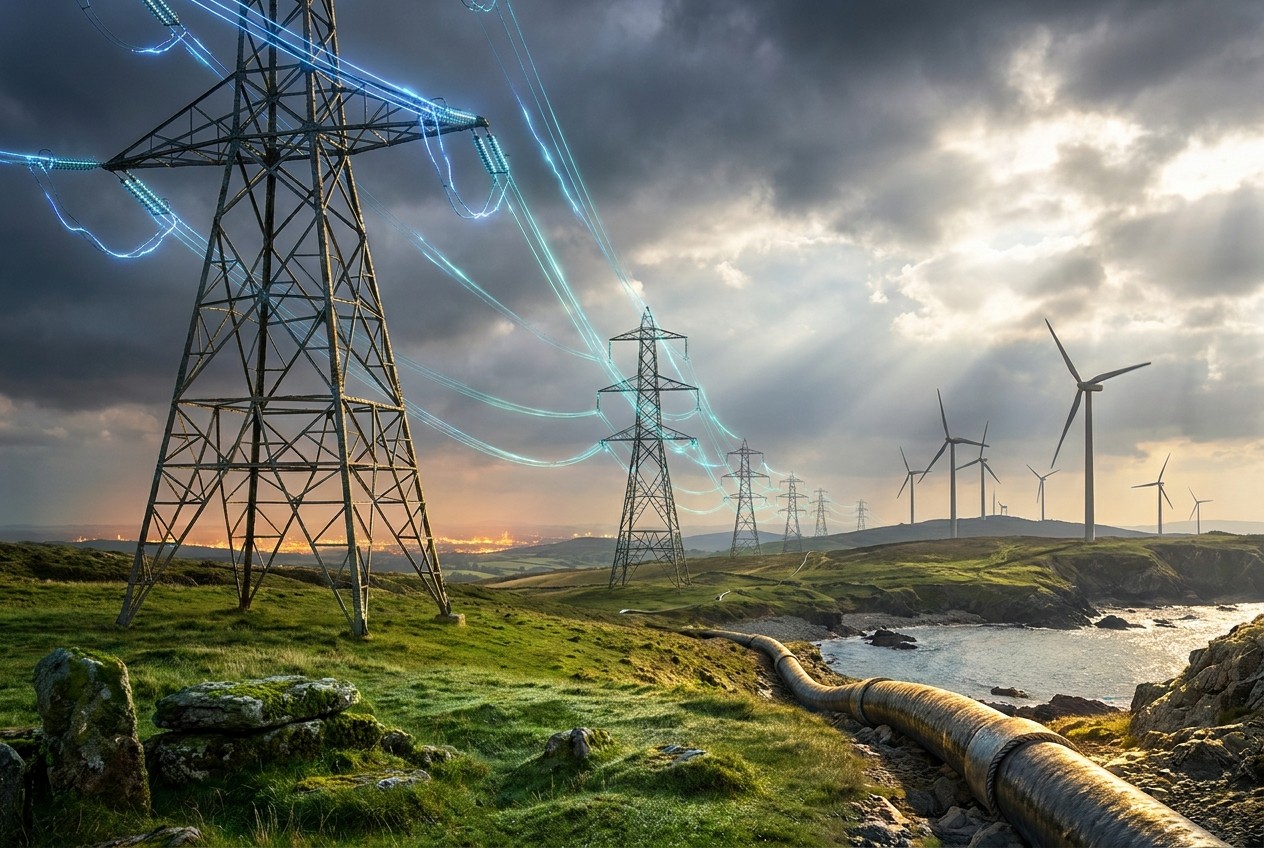
Britain may need to spend more than £150 billion on new transmission infrastructure to connect a rapidly expanding pipeline of wind and solar projects to the national grid, according to estimates attributed to the National Energy System Operator (NESO).
The figures, reported by energy analyst Felicity Bradstock, put required transmission investment at approximately £64 billion through 2030 and another £89 billion beyond that point, for a combined total exceeding £150 billion. A separate analysis by The Guardian, cited in the same reporting, indicated that relieving Britain’s transmission bottlenecks would require well over 4,000 miles of new power lines by 2041.
NESO has stated that the expansion is intended to connect wind and solar generation and reduce reliance on fossil fuels. The program is described as the largest overhaul of the country’s electricity network in generations, with five times as much infrastructure scheduled to be built by the end of the decade as was built in the previous 30 years, according to the operator.
Investment Breakdown and Project Scope
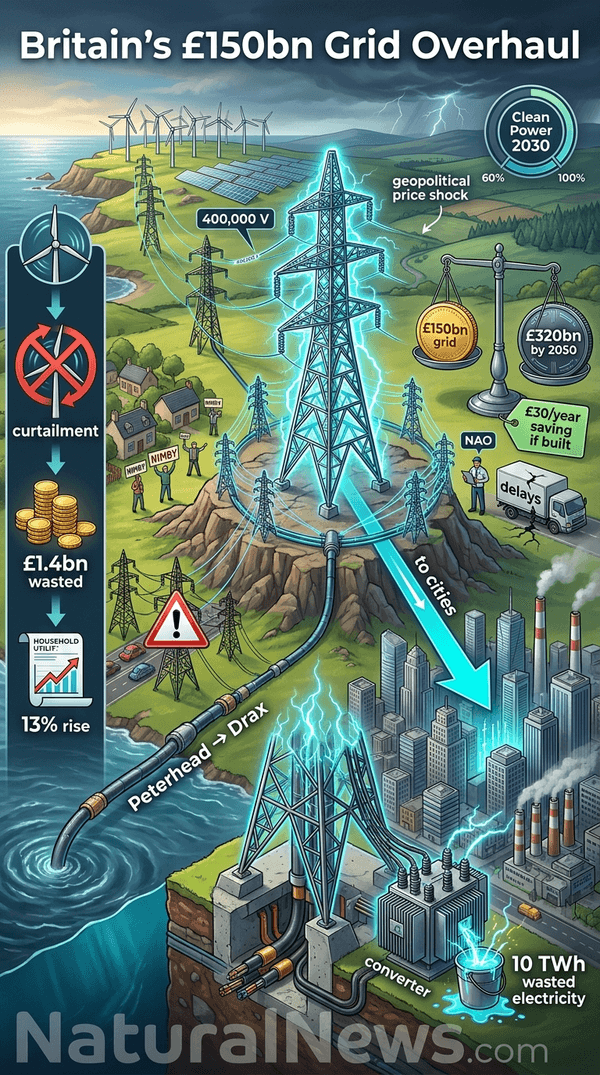
Operators are expected to invest £22 billion over five years in rewiring the Highlands, the islands and north-east Scotland, including the construction of more than 1,100 pylons carrying high-voltage cables over roughly 460 kilometers to customers in the south, according to the report. A further £4 billion is planned for a subsea cable running approximately 315 miles from Peterhead in Aberdeenshire to Drax in North Yorkshire.
The projects include new pylons, subsea cables and converter stations designed to transmit electricity at 400,000 volts, the report stated. The scale of construction reflects a fundamental change in where British electricity is generated: for the past century, the grid was built around coal and gas plants located near major cities, while renewable projects are increasingly sited in remote locations that require long-distance transmission.
Keith Bell, a professor of electronic and electrical engineering at the University of Strathclyde, said the network is a precondition for using the generation Britain is building. “If we don’t have enough transmission network capacity, we won’t be able to make full use of renewable energy resources,” Bell said, adding that the country would then be “more dependent on fossil fuels, with greater vulnerability to fossil fuel price shocks and higher CO2 emissions.”
Independent researchers have reached similar conclusions about the relationship between transmission capacity and renewable utilization. A study published in Renewable and Sustainable Energy Reviews found that transmission lines are designed to carry large amounts of power over long distances, and that “the larger the amount of power to be carried, and the greater the distance to be traversed, the higher the voltage at which the transmission line is designed” [1].
Costs, Consumer Impact, and Regulatory Outlook
Consumer energy bills are expected to rise in the short term to fund the grid transformation at a time when households are already contending with cost-of-living pressures. Recent price-cap data illustrate the pressure: typical annual household bills were set to rise by 13 percent when a new energy cap took effect on July 1, with part of the increase attributed to higher network maintenance costs [2].
The industry regulator Ofgem said it expects households to be around £30 a year better off if the upgrades proceed at the required pace, due to reduced curtailment costs. Ofgem acknowledged, however, that some projects are forecast to run beyond 2030, meaning some renewable energy sites will likely experience delayed grid connectivity.
Gareth Davies, head of the National Audit Office (NAO), said the planned upgrades would “test systems not designed for activity at this pace or scale.” Davies added: “Value for money now depends on delivery. Failure to implement these necessary grid upgrades will hamper economic growth as well as increase consumer bills.” The NAO stressed: “It is important to minimise this gap, as delays will increase project and constraint costs and postpone the benefit of achieving clean power.” The concern is not theoretical. Reporting disclosed to The Times by a whistleblower found that NESO cannot accurately model the modern power system as the government pursues its renewable drive, with the whistleblower claiming the government-owned operator was “flying blind” in its ability to correctly forecast supply and demand [3]. In a separate development, Ofgem launched a consultation on a proposed commitment fee for data center projects as part of reforms intended to ensure network capacity is used by projects that are ready and able to connect [4].
Challenges and Controversies
The expansion plan is controversial because many of the cables will need to run through rural areas, which has prompted a “not in my backyard” response from residents, according to the report. The change reflects a shift from a fossil fuel-based grid built around coal and gas plants near cities to renewable projects in remote locations, a transition that requires far more extensive transmission infrastructure than ever before.
Regulators and the NAO have warned that delayed upgrades could increase constraint costs and leave renewable projects waiting for sufficient grid capacity. Existing data already show the cost of grid congestion: a record 10 terawatt-hours of wind power went to waste in 2025, costing billpayers £1.4 billion in curtailment payments, according to energy analyst Montel [5]. Scotland’s largest offshore wind farm, Seagreen, wasted 77 percent of the power it produced, and constraint payments are projected to reach £8 billion annually by 2030 if the grid is not expanded, according to reporting by NaturalNews.com [6]. The U.K. also paid solar farms £102,500 in a single year to switch off during sunny periods of grid overload, with constraint payments reaching £650 million in 2025 [7].
The U.K. government set out its Clean Power 2030 targets at the end of 2024, aiming to increase clean-energy generation from 60 percent to 100 percent by 2030. The report stated that efforts were accelerated due to fossil fuel price volatility from geopolitical challenges, including the Russia-Ukraine war and the war in Iran. A leaked analysis by the economic think tank Onward, originally commissioned by former Conservative Energy Secretary Claire Coutinho, estimated that the Clean Power 2030 plan would add £320 billion in energy costs by 2050 compared with a more balanced approach favoring gas and nuclear generation [8].
Outlook and Implications
If the overhaul succeeds, the report stated that the U.K. could encourage other countries to accelerate their green transition efforts. Achieving the build-out within the targeted timeframe, however, is described as an extremely complex and costly undertaking, with the grid expansion stretching from northern Scotland to the southernmost part of England and additional cables buried beneath the sea.
The investments are expected to eventually reduce costs by lowering reliance on expensive gas generation, but they will not alleviate short-term price pressure on consumers, according to the report. Grid instability linked to the transition has already had measurable economic effects. An analysis by an independent energy policy group found that the global transition to renewable energy has resulted in a $40 trillion loss in potential economic growth due to grid instability and capital misallocation [9].
Historical precedent suggests political consequences can follow electricity prices. In Ontario, voter anger over high electricity rates contributed to the Progressive Conservative party’s 2018 election victory, in which Doug Ford campaigned on a pledge to cut rates by 12 percent [10]. For Britain, the coming decade will test whether a centralized grid build-out designed around intermittent generation can be delivered without repeating the curtailment, cost and reliability problems documented so far.
References
- Elsevier. “Techno-economic feasibility of energy supply of remote villages in Palestine by PV-systems, diesel generators and electric grid”. Renewable and Sustainable Energy Reviews 10 (2006) 128–138.
- BBC. “What is happening to gas and electricity prices? Typical annual household bills will rise by 13% when the new energy cap takes effect on 1 July”. BBC.com. May 27, 2026.
- The Times. “UK Times reports obvious: Net-zero race ‘risks blackouts & higher bills’ report by national grid system warns”. Climate Depot. July 28, 2026.
- Tsvetana Paraskova. “UK Regulator Targets Data-Center Land-Grab On The Power Grid”. ZeroHedge. July 30, 2026.
- Montel. “Constraint Payments Soar to New Record”. Watts Up With That. January 24, 2026.
- NaturalNews.com. “Scotland’s largest wind farm wastes 77% of its power as grid fails to keep pace”. NaturalNews.com. January 9, 2026.
- Willow Tohi. “Overcapacity Catastrophe: U.K. Pays Solar Farms to Shut Down Due to Grid Overload from Sunny Days”. NaturalNews.com. July 9, 2025.
- NaturalNews.com. “Leaked analysis: Miliband’s clean energy plan to cost UK taxpayers £320 billion by 2050”. NaturalNews.com. September 2, 2026.
- Iva Greene. “Analysis of Energy Transition Costs Finds Grid Instability, Slower Economic Growth”. NaturalNews.com. April 3, 2026.
- Robert Bryce. “A Question of Power: Electricity and the Wealth of Nations”.
Explainer Infographic
Submit a correction >>
Tagged Under:
big government, Clean Energy, CO2, debt bomb, debt collapse, electricity, energy, energy price, expansion, government debt, green living, Green New Deal, insanity, money supply, NAO, NESO, power, power grid, renewable energy, UK
This article may contain statements that reflect the opinion of the author
RECENT NEWS & ARTICLES